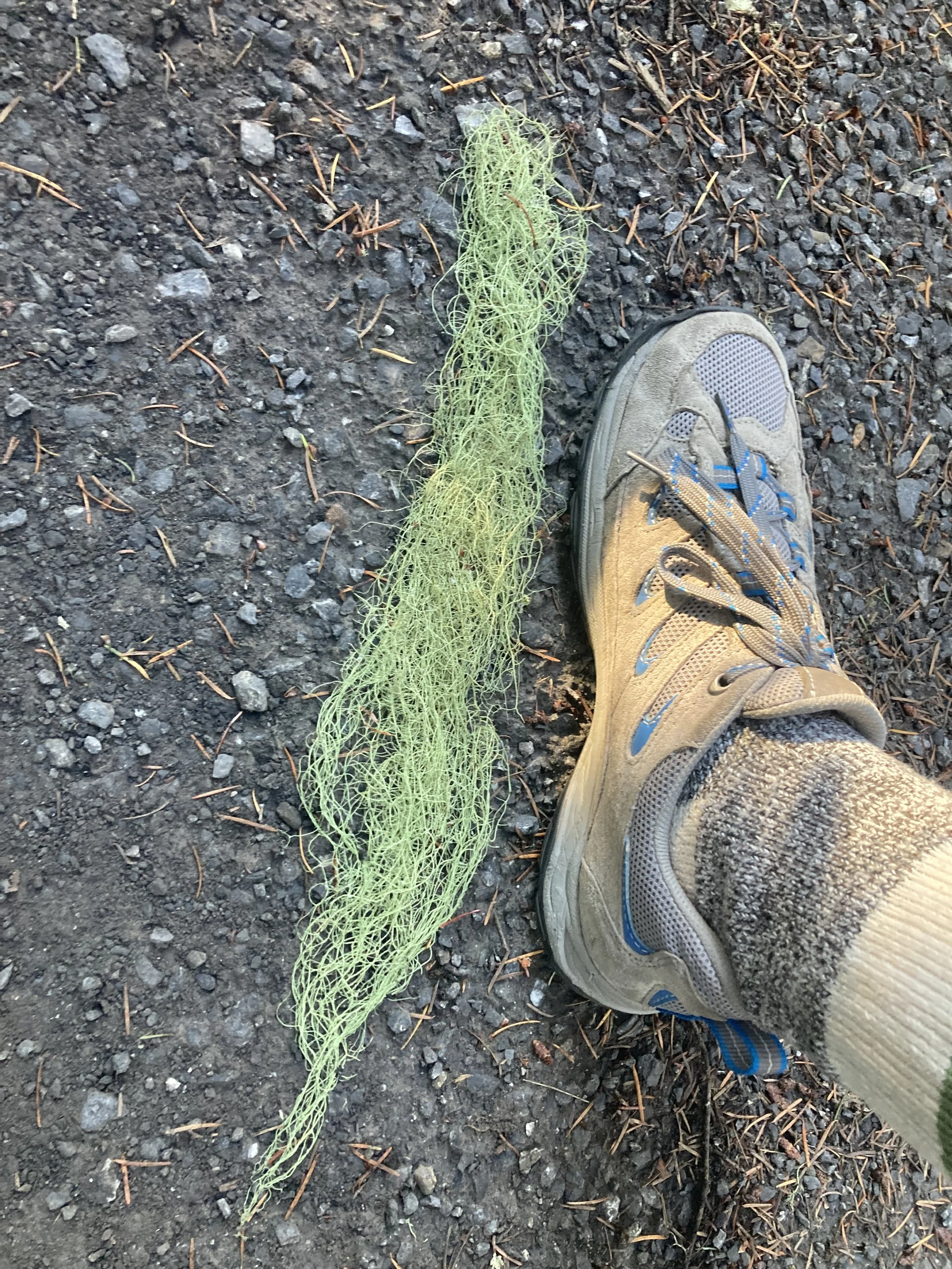
Usnea (AKA Old Man’s beard, Methuselah’s beard, Wirth’s beard, beard lichen)
Usnea spp. (U. longissima, U. wirthii)
Family: Parmeliaceae
Energetics: Cool, dry, tonifying
Actions: antiseptic, astringent, immune stimulant
This herb is a lichen composed of yellow-green stringy hanging strands that may appear as a lush pendulous curtain or as small tufts, though always growing on a tree. The most common types of usnea in our area are Methuselah’s beard (U. longissima), growing long 6-14 inch relatively unbranched strands in very wet environments such as the Olympic forests. Conversely, Wirth’s beard grows short 2-3 inch tufts containing a yellow central cord.
To distinguish usnea from other lichen species, wet the thallus and gently pull on the strand in opposite directions. Usnea will reveal a light colored and sometimes yellow, brown or red elastic cord within. This differentiates it from a similar lichen
Usnea is a relatively rare plant, occupying areas of particularly clean air. This herb is at risk due to climate change, with more frequent wildfires polluting the air and threatening this species. As it is a slow growing species, it is susceptible to overharvest. Do not harvest usnea from trees. Collect usnea from fallen branches on the ground, or harvest from low limbs and brush that have yet to be cleared for fire safety. Making medicine with the usnea is a way to honor the forest’s bounty despite the destruction of the underbrush that ultimately maintains the health of the woods.
Usnea is a fantastic ally when working with states of infection. Usnic acid is a constituent that has been identified that has broad spectrum antimicrobial activity, though that is not the only constituent lending to its antiseptic qualities as Paul Bergner notes that diffractaic, protocetraric and norstictic acids are also profoundly antimicrobial. Usnea is especially effective against gram positive bacteria such as staph, strep, tuberculosis, pneumococcus and more.
Known as an “herbal antibiotic”, this herb can be worked with internally for infectious conditions such as pneumonia and wet boggy upper respiratory conditions where its astringent action can cause a reflexive response that dries the respiratory mucosa. It can be gargled or drank as tea or swallowed as tincture to combat strep throat, abscesses and oral infections. Usnea tincture may also be utilized as a spray to help get its constituents directly to the infected tissue.
Arguably the best way to work with usnea is to get it directly onto the affected tissue. Usnea is fantastic for wound care. When utilized as a diluted tincture or tea applied to a wound, it can be a fantastic broad spectrum antiseptic which kills not only bacteria, but viruses and fungi as well. It makes for a great friend when dealing with MRSA and other persistent bacterial infections.
This herb is best tinctured using heat to extract the usnic acid. You will know you have a potent product if the tincture is yellow. I would recommend a double extraction in order to infuse both the water and alcohol soluble constituents into the tincture.
Strictly avoid internal use when taking immune modulating drugs. Allow a buffer of one week before and after a vaccination before internal use. Those with sensitive autoimmune states should exercise caution when working with this herb internally as it can stimulate an immune response.