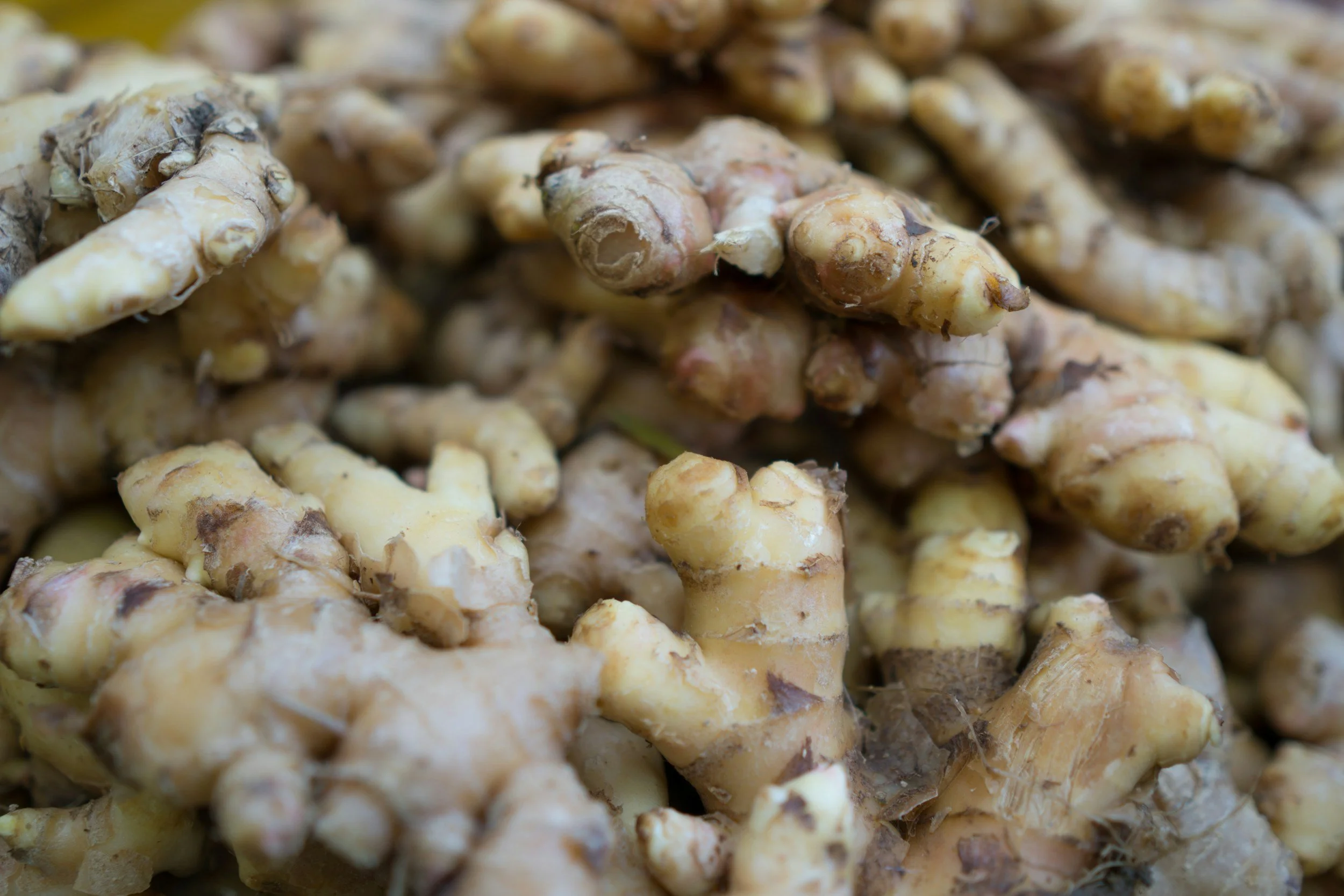
Ginger - Zingiber officinale
Family: Zingiberaceae
Energetics: Hot, dry, relaxant
Actions: Diaphoretic, dispersive (especially when fresh), blood thinner and mover, relaxant with a pelvic and gut affinity, emmenagogue, carminative, anti-inflammatory, rubefacient
Another friendly grocery store herb, fresh and dried ginger can be found at many marketplaces. This familiar rhizome is used in many cuisines and you may recognize the taste from curries, sodas, chai and pumpkin pie.
Typically grown in zones south of zone seven, ginger is adaptable to living indoors and can be propagated from fresh chunks with at least one node in a twelve inch deep pot. Chop it into small chunks, let it dry for two to three days and then plant and keep in soils above fifty degrees and keep moist but not soggy in a sunny windowsill.
Ginger is a fantastic carminative, increasing the nutrient absorption of your food while dispelling gas and reducing gastrointestinal cramping. It is best indicated for cold sluggishness of the guts with incomplete digestion. It makes an excellent addition to a gut heal tea when worked into formulas with friends like chamomile, plantain, calendula, licorice, red clover, fennel… (Truly, the list could go on!)
When worked with as fresh herb, ginger has a more compelling dispersive action than its dried counterpart. I find its volatile oil content to be better indicated for sweating out a fever and bringing blood to the periphery. Ginger when dried is still pungent, though more indicated for cold sluggishness in the core. I find fresh ginger preferable for stagnant throbbing headaches with a tension component.
When it comes to the pelvis, whether it involves slow digestion in the gut or a stagnant and slow to start or scant period, ginger can bring fresh blood and warmth to these areas. This relieves inflammation by helping to remove inflammatory cellular detritus and bring fresh nutrients to the tissues, which can relax spasms and encourage movement both in the pelvis and throughout the body.
Ginger can help relieve a cough characterized by persistent, spastic, and shallow coughing. It can make a fantastic addition to a Winter syrup to reduce inflammation, encourage a healthy fever response and to help us relax into bed.
When applied topically, ginger is rubefacient, bringing fresh blood and nutrients to an area allowing for the release of tension and the clearance of waste. Topical ginger can be a friend to those with bruises, sore muscles (from temples to toes!), sprains + strains, and ginger can even penetrate deep enough to relieve menstrual and gut cramping.
Ginger is arguably the best nausea remedy I have encountered, alongside catnip. The dose matters less than the act of tasting the ginger. I have found ginger effective with nausea associated with stomach upset as well with medication induced nausea and morning sickness. This effect can be achieved by sucking on a slice of fresh ginger. If that is too intense, you could try as few as five drops of ginger at a time absorbed in the mouth. You can also work with candied ginger or candies (make sure it has real ginger!)
To try yourself, start by decocting a single two inch long thumb in one quart of water for 30 minutes for a potent fresh preparation. Two tablespoons of dry rhizome can be decocted similarly for a more deeply warming and less dispersive brew. Either of these can be steeped in hot water for the same amount of time, though I do not find these teas to be nearly as potent compared to decoction.
Due to the blood thinning effects of this herb, do not work with ginger if you are on blood thinners. Avoid high doses of ginger prior to surgery. Ginger is a very heating herb and can be uncomfortable in the bodies of those who overheat easily. Avoid using ginger as a simple preparation with hot conditions of the gut such as heartburn and diarrhea. As an emmenagogue, ginger can increase blood flow during menstruation.